General Contractor Solutions for Residential and Commercial Renovations
Renovation work has a way of looking simpler on paper than it feels on site. A homeowner might picture a brighter kitchen, a loft conversion, or a cleaner layout for family life. A business owner might be chasing better customer flow, compliance upgrades, or a space that reflects the brand more convincingly. Then the practical realities arrive: structural surprises, lead times, building control, dust, neighbours, deliveries, budgets that shift under pressure, and trades that depend on each other getting their part right.
This is where a skilled General Contractor earns their keep. Not by waving a magic wand, but by bringing order, accountability, and sequencing to a process that can otherwise unravel fast. In both residential and commercial work, the difference between a stressful build and a controlled one usually comes down to management, communication, and judgement on the ground.
In places like Hull, where property stock ranges from older terraced homes and post-war housing to modern units, offices, retail spaces, and light industrial premises, renovation work often demands flexibility. Older buildings hide uneven walls, dated electrics, and patchwork repairs from previous decades. Commercial spaces bring another layer of complexity, especially where access hours, fire safety, licensing, and customer-facing operations are involved. A contractor who understands both the technical side and the practical realities of working in occupied or active spaces can save weeks of disruption and a fair amount of money.
What a general contractor actually solves
People often think of contractors only in terms of labour, but labour is only one part of the job. A strong contractor acts as the central point of responsibility. That means coordinating trades, controlling the sequence of works, managing materials, checking quality, and keeping the project aligned with the agreed scope.
That sounds straightforward until you see what happens when it is missing. Plasterers turn up before first-fix electrics are finished. Flooring is delivered before the area is dry enough to install it. A client changes a bathroom layout, but no one updates the plumber before pipework goes in. An office refurb runs late because partitioning was measured before a final decision on data points. None of those are dramatic headline failures, yet each one costs time, money, and trust.
A good General Contractor prevents these errors by thinking several steps ahead. In practice, that often means asking unglamorous but essential questions early. Are there long-lead materials such as bespoke windows, steelwork, joinery, or specialist lighting? Is there asbestos information for an older commercial unit? Can noisy works only happen outside trading hours? Does the client need temporary kitchen access during a house renovation, or can the room be fully stripped for several weeks? These details shape the programme more than the mood board does.
The best contractors also know that renovation is rarely a straight line. Walls open up. Floor levels differ from drawings. Drain runs are not where anyone expected. The solution is not panic or overpromising. It is measured decision-making, clear options, and enough site experience to distinguish a true problem from a manageable variation.

Residential renovations need more than good workmanship
Home renovation is deeply personal. People are not just improving an asset, they are altering the place where they eat, sleep, work, and raise children. That changes the contractor’s role. Technical competence matters, of course, but so does consideration. Timing, cleanliness, access, noise, safeguarding, and regular updates all carry more weight when a family is still living in the property.
In residential work, one of the most common mistakes is underestimating the knock-on effect of one change. A client might request a larger island in the kitchen, only to discover it affects floor sockets, circulation space, pendant positions, and possibly the structural opening if the design was already tight. A seasoned contractor will spot those interactions before they become expensive.
This is particularly relevant in Property Renovation Hull projects, where many homes have quirks that do not show up neatly in estate agent photographs. Chimney breasts may have been removed badly in the past. Floors may dip. Extensions built years apart can create awkward junctions. Damp issues are sometimes cosmetic, but just as often they point to ventilation problems, failed pointing, bridging, or plumbing leaks. A contractor with local renovation experience tends to recognise these patterns earlier and plan accordingly.
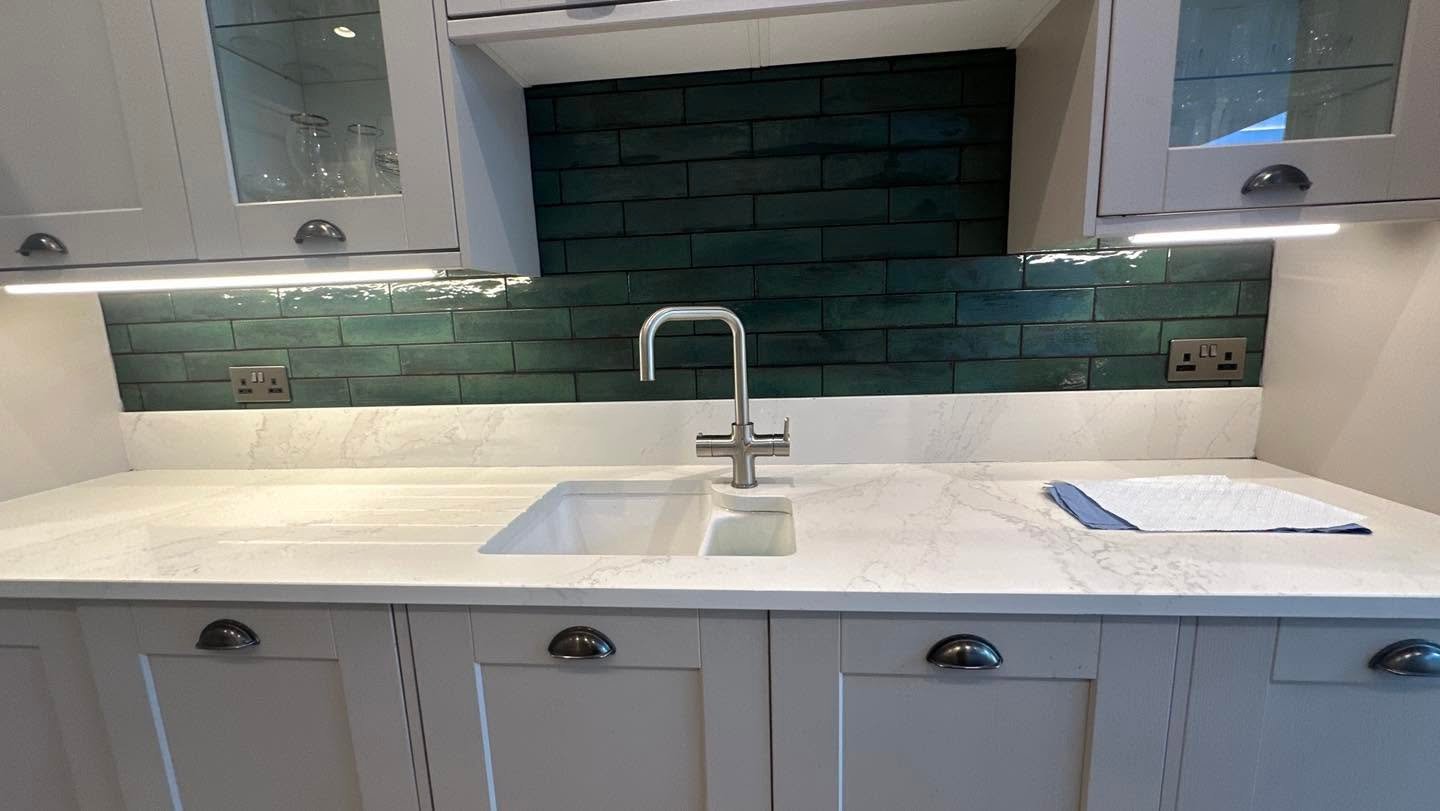
Loft conversions, rear extensions, full-house refurbishments, and kitchen remodelling each bring different priorities. A loft conversion often hinges on structural design, stair positioning, insulation strategy, and head height. A kitchen renovation lives or dies by service coordination, because electrics, plumbing, extraction, plastering, flooring, and joinery all overlap in a compact area. Whole-house work requires especially strong sequencing. It is not unusual for clients to focus first on finishes, but the real success of the project is usually set by what happens behind the walls and under the floors.
There is also the question of whether people stay in the house while works proceed. Sometimes it makes financial sense. Sometimes it is false economy. If a family remains on site during a major renovation, the contractor needs to create a workable plan for temporary services, dust barriers, safe access routes, and realistic working hours. If the project is extensive, moving out for even part of the programme can speed things up considerably and reduce friction. There is no universal rule here. It depends on the property, the scope, the occupants, and the budget.
Commercial renovations bring tighter margins for error
Commercial projects carry a different kind of pressure. A delayed handover can mean lost rent, delayed opening, interrupted trade, or unhappy tenants. In offices, downtime affects productivity. In retail, poor phasing can hit revenue immediately. In hospitality, finishing late can knock staffing plans and bookings off course. The contractor’s role becomes less about convenience and more about continuity, compliance, and risk control.
A well-run commercial renovation starts with a proper read of the building’s operational needs. A shop fit-out may need to preserve public access while work happens in phases. An office refresh might be done floor by floor to keep teams functioning. A restaurant refurbishment could require strict coordination around extraction, grease management, wash areas, and front-of-house finishes. Warehouses and mixed-use sites often need extra attention around loading access and safety segregation.
The practical demands are broader too. Fire stopping, emergency lighting, accessible routes, ventilation, acoustic performance, data cabling, and signage all matter, and they matter in relation to each other. It is no use fitting excellent partitions if the door ratings, ceiling void treatments, or service penetrations are left unresolved. A General Contractor who regularly handles commercial interiors will keep those threads tied together rather than treating each trade package as a separate island.
One office refurbishment I saw several years ago looked simple at first glance: refresh the reception, reconfigure two meeting rooms, install new flooring, and improve lighting. The real challenge turned out to be the live environment. Staff still needed to work, client visits could not stop, and the building had limited storage and awkward delivery times. The project succeeded not because the work itself was exotic, but because it was phased sensibly. Noisy demolition happened early in the morning, temporary screening was installed before the first wall came down, and materials were ordered in smaller batches to avoid clogging up the site. The lesson was plain enough: in commercial work, logistics often decide whether the project feels professional.
The planning stage is where value is created
Most serious renovation savings do not come from shaving labour rates. They come from making smarter decisions before the first tool comes out. That is one reason experienced contractors want to be involved early. They can flag buildability issues, recommend alternatives, and help clients spend money where it counts.
Early contractor input is particularly useful when the brief is ambitious but the budget is not unlimited, which is common in both domestic and commercial projects. A designer may specify a product that looks excellent but has a lead time that does not fit the programme. A layout might require structural steel that can be simplified without changing the overall effect. A commercial finish may be too delicate for high footfall. These are General Contractor Hull not reasons to compromise the project, but they are reasons to align the design with reality.
At this stage, honest budgeting matters more than optimistic budgeting. A vague allowance can store up arguments later. Good contractors break costs down clearly enough for a client to understand the balance of spending between demolition, structural work, services, finishes, and contingencies. They also explain where uncertainty sits. Older properties, especially, deserve a sensible contingency because hidden defects are not rare. Pretending otherwise does not make the quote more accurate. It only delays the difficult conversation.
Where property maintenance fits into renovation work
Renovation and maintenance are often treated as separate conversations, but in practice they are closely linked. Ongoing upkeep shapes how much renovation is needed, and renovation choices influence future maintenance costs. Any contractor offering Property Maintenance Hull services will recognise that many larger refurbishments begin with issues that could once have been handled as smaller repairs.
A leaking flat roof that is ignored for two winters can become a ceiling replacement, electrical remedial work, insulation replacement, and mould treatment. Failed sealant around commercial glazing might seem minor until it leads to internal damage and lost heat. Rotten external joinery, neglected gutters, and unresolved damp patches all have a habit of inflating future project scope.
This matters for clients because maintenance data is useful. If a building has a history of drainage backups, patch repairs to wiring, recurring condensation, or repeated roof callouts, that information should inform the renovation brief. It tells the contractor where to investigate more carefully and where a superficial upgrade may not be enough.
For landlords and business owners, maintenance-led planning often delivers better long-term value than reactive spending. A planned refurbishment that upgrades tired finishes while also dealing with mechanical and electrical weaknesses is usually less disruptive than repeated emergency interventions. The same is true in homes. If a client is already opening up walls during a refurbishment, it can make sense to tackle dated pipework or poor insulation at the same time, even if those upgrades are not the glamorous part of the scheme.
Choosing the right contractor, and what to look for beyond price
Price matters, but price alone is a poor filter. A lower number can reflect efficiency and buying power, or it can reflect omissions, unrealistic assumptions, or a weak understanding of the project. Clients tend to fare better when they assess how a contractor thinks, not just what they charge.
A worthwhile tender or proposal usually shows whether the contractor has grasped the detail. Have they identified the likely pinch points? Have they allowed for enabling works, protection, waste removal, testing, and making good? Have they asked sensible questions rather than rushing to promise the fastest turnaround? Renovation work rewards realism.
These are some of the strongest indicators that a contractor is equipped for the job:
- They can explain the sequence of work clearly, not just the finish.
- They discuss risks and unknowns without sounding evasive.
- They show how communication, variations, and approvals will be handled.
- They understand the difference between occupied and vacant site working.
- They talk about aftercare and snagging as part of the process, not as an afterthought.
References and previous work matter as well, though they need context. A contractor excellent at new-build shell work is not automatically excellent at live commercial refurbishments. Someone strong on domestic extensions may not be the right fit for a phased office refit with compliance-heavy elements. Matching experience to project type is more useful than collecting generic testimonials.
It is also worth Kitchen Remodeler CHM Yorkshire noticing how a contractor behaves before the contract is signed. Are site visits punctual and observant? Do follow-up notes make sense? Are questions answered directly? Small habits at the start often become bigger habits once the job begins.

Managing scope creep without losing flexibility
Almost every renovation changes shape at some point. That is not automatically a sign of poor planning. Clients refine ideas, site conditions reveal new information, and sometimes a better option only becomes obvious when the space is stripped back. The problem is not change itself. The problem is uncontrolled change.
A competent contractor creates a process for variations that is firm but practical. If the client wants an upgraded flooring product, a revised partition layout, or additional built-in joinery, the cost and programme effect should be set out before the instruction is acted on. That protects both sides. It stops clients being surprised by the final account, and it stops contractors being Fence Contractor expected to absorb unpaid extras.
Judgement matters here. Some changes genuinely improve the end result enough to justify the disruption. Others look attractive in isolation but create a chain reaction. I have seen modest layout changes in bathrooms lead to complete rework of pipe routes, delayed tiling, and reordered vanity units because no one paused to assess the downstream effect. A careful contractor will slow the moment down and present the trade-off plainly.
At the same time, rigidity is not a virtue. Renovation is not manufacturing. The best contractors stay flexible where it helps the project, especially when site discoveries demand an immediate practical solution. The key is to pair flexibility with documentation and transparency.
Timelines, contingencies, and the truth about “quick jobs”
Clients often ask the same question in different words: how long will it really take? The honest answer is that renovation programmes are influenced by access, complexity, procurement, design maturity, and the number of unknowns in the building. A kitchen refit might be measured in weeks, but if structural alterations, rewiring, or bespoke joinery are involved, those weeks stack up quickly. A commercial refresh may look light-touch, yet extended approval chains or out-of-hours working can stretch the programme.
Fast is possible when the scope is controlled, decisions are made promptly, materials are available, and the site is straightforward. Fast becomes fiction when any of those conditions are missing. Good contractors tend not to promise the shortest programme. They promise one they can defend.
There is a practical way to think about renovation time. First comes pre-construction, when design decisions, approvals, ordering, and planning happen. Then comes the physical work, which depends heavily on sequence. Finally, there is completion, testing, snagging, and handover. Clients who only count the visible site phase often underestimate the full timeline.
Contingencies are part of this realism. In older residential stock and adapted commercial units, holding both time and budget contingency is sensible. That is not pessimism. It is a response to how buildings actually behave once opened up. The contractor’s task is to reduce avoidable uncertainty, not deny the existence of unavoidable uncertainty.
Quality control is not just about appearance
People naturally judge a renovation by what they can see: straight lines, neat joints, smooth paint, aligned ironmongery, crisp flooring details. Those things matter. They reflect care. But the hidden quality is just as important, especially in projects meant to last.
Good contractors inspect first-fix work before it disappears. They check levels before expensive finishes go down. They verify service locations against final layouts rather than assuming the plan still fits after changes. They look at moisture content, substrate condition, ventilation requirements, and manufacturer guidance. That sounds basic, yet a surprising number of defects begin with rushing one stage to keep the next trade moving.
In commercial environments, quality control also includes usability. Doors need to swing clear. Lighting needs to work for the task, not just the photograph. Finishes should suit the wear they will receive. In homes, usability means storage that makes sense, sockets where people actually need them, bathroom layouts that allow comfortable movement, and heating adjustments that match the altered space. The best renovations feel obvious once finished, as if the building should always have worked that way.
Aftercare, snagging, and the relationship after handover
The project is not truly complete on the day the last operative leaves. Snagging is normal. Minor adjustments, sealant touch-ups, alignment tweaks, and finish corrections are part of a professional close-out process, not a sign of failure. What matters is how they are handled.
Reliable contractors set expectations for snagging, arrange return visits sensibly, and keep records of outstanding items. They also distinguish between defects and maintenance issues. Timber may need seasonal adjustment. New plaster needs proper drying and decorating cycles. Commercial flooring may require specific cleaning regimes. A handover that includes this kind of practical guidance tends to prevent unnecessary disputes later.
This is another point where long-term Property Maintenance Hull support can be valuable. If the same contractor or company can provide ongoing maintenance after a renovation, small issues are more likely to be caught early and resolved in context. That continuity is especially useful for landlords, multi-site operators, and commercial clients who need predictable response and accountability.
Why the contractor model still matters
There are projects where a client can coordinate separate trades themselves. For a simple decorating package or a very limited scope, that may work well. But once a renovation involves structural change, multiple trades, service coordination, compliance checks, specialist materials, or a live environment, the coordination burden grows quickly. So does the cost of mistakes.
That is why the General Contractor model continues to matter. It concentrates responsibility, clarifies communication, and creates a workable chain of decision-making. More importantly, it gives clients access to experience that cannot be reduced to a checklist. Knowing when to open an area up Property Renovation Hull chmyorkshireltd.co.uk for inspection, when to challenge a drawing detail, when to phase works differently, or when a cheaper option will cost more in six months, that is where real value sits.
For residential clients, that value often shows up as a smoother build, fewer nasty surprises, and a finished home that functions better every day. For commercial clients, it shows up as controlled downtime, stronger compliance, and a space that supports the business rather than interrupting it. Whether the job is a full Property Renovation Hull project, a phased office upgrade, a retail refit, or a broader programme tied into Property Maintenance Hull, the principle is the same. Renovation succeeds when planning, workmanship, and site judgement work together under one clear lead.
That is the practical promise of a capable General Contractor. Not perfection, because no renovation is perfect. Something more useful than that: a project managed with discipline, built with care, and adapted intelligently when the building has other ideas.
CHM Yorkshire Ltd
Hull
HU9 5BU
Tel: 01482 455159
Website: https://www.chmyorkshireltd.co.uk